The difference between a correctly sized system and an overpriced offer can be huge. Capacity, equipment, warranties, and promised output: here are the key points to check.
Installing photovoltaic panels can be an excellent investment. But the difference between a correctly sized quote and an overpriced commercial offer can amount to several thousand euros.
The photovoltaic sector has also become an area with a huge number of players: specialist installers, electricians, commercial companies, sales platforms, subcontractors and businesses that have recently appeared to take advantage of the growing market.
As a result, two quotes for a seemingly identical installation can have very different prices.
Before signing a photovoltaic quote, you therefore need to check much more than just the number of panels and the total price.
1. How much does a photovoltaic installation cost in 2026?
There is no single European price.
The cost depends on factors including:
- the installed capacity in kWp;
- the make and efficiency of the panels;
- the type of inverter;
- the potential presence of micro-inverters;
- the battery;
- the mounting system;
- the roof configuration;
- the electrical protections;
- the labour;
- the administrative procedures;
- and the country where the installation is carried out.
For a typical residential installation of around 4 to 6 kWp, price differences can be significant.
Belgium
For a standard residential installation without a battery, budgets are frequently in the range of €5,000 to €9,000, depending on the capacity, equipment and installation difficulties.
A home battery can easily add several thousand euros to the project.
However, a high price is not automatically a sign of quality.
France
For a residential installation of a few kWp, quotes can regularly be between €7,000 and €14,000, or even more depending on the capacity and services.
Particular attention should be paid to offers that combine photovoltaics, financing and promises of spectacular savings.
Germany
The German market is particularly developed and competitive.
Installations can benefit from competitive prices, but any comparison must take into account the exact capacity, any storage and the quality of the proposed equipment.
The Netherlands
The Netherlands also has a highly developed photovoltaic market.
Competition between installers can drive prices down, but you must carefully check the warranty conditions and the company's financial situation.
Spain
Thanks to its high levels of sunshine, Spain naturally has considerable photovoltaic potential.
For a detached house, a residential installation can generally represent several thousand euros, with significant differences between regions and installers.
The profitability calculation must take into account the home's actual consumption profile.
Portugal
Portugal also enjoys very favourable sunshine conditions.
As in Spain, a correctly sized installation can be particularly worthwhile, but excessive capacity in relation to your needs can severely reduce profitability.
Italy
In Italy, the price varies greatly depending on the region, the roof, the capacity and any batteries.
It is also necessary to carefully examine the tax incentives and grants that are actually applicable at the time of signing.
Comparing only the total price is therefore a mistake.
You need to compare the price per kWp, but also the technology, warranties and all the services included.
2. Check the exact make and model of the panels
A quote that simply states: '12 high-performance photovoltaic panels' is not specific enough.
The quote should allow you to identify:
- the manufacturer;
- the exact model number;
- the nominal power of each panel;
- the efficiency;
- the technology used;
- the product warranty;
- the performance warranty.
Two 450 W panels are not necessarily equivalent.
The manufacturer's reputation and the ability to claim on a warranty in ten or fifteen years are also important.
3. Beware of performance promises
A reputable installer should be able to explain how they estimate the annual output.
This estimate depends on factors including:
- the orientation;
- the tilt;
- the location;
- any shaded areas;
- the installed capacity;
- the system losses;
- the temperature;
- the inverter type.
A sales promise like: 'Your electricity bill will disappear' should immediately raise questions.
A photovoltaic panel produces electricity. It doesn't guarantee that the household's consumption will exactly match the production periods.
4. String inverter or micro-inverters?
The inverter is a crucial part of the system.
With a string inverter, several panels are usually connected together.
Micro-inverters are installed at the panel level and can offer certain advantages, particularly when the roof has different orientations or shaded areas.
But they generally cost more.
The quote must specify:
- the make;
- the model;
- the power;
- the warranty;
- the number of units;
- their compatibility with the panels.
A quote that only mentions 'inverter included' should be clarified before signing.
5. Battery: profitable or just a sales pitch?
The home battery has become a major selling point.
But it is not automatically profitable.
Its value depends on factors including:
- the price of electricity;
- your consumption profile;
- the photovoltaic output;
- the storage capacity;
- the number of cycles;
- the battery efficiency;
- its lifespan;
- the purchase price.
An oversized battery can be very expensive without providing a proportional saving.
Always ask: What additional annual saving is this battery actually supposed to generate?
6. The quote must be technically complete
A good photovoltaic quote should not be limited to: 'Supply and installation of photovoltaic system: €11,500'
It should detail the project sufficiently to allow for comparison.
Check for details on:
- number of panels;
- power per panel;
- total capacity in kWp;
- make and model of panels;
- inverter or micro-inverters;
- mounting structure;
- cabling;
- electrical protections;
- enclosures;
- earthing;
- monitoring;
- administrative procedures;
- any electrical inspection;
- connection;
- scaffolding or access equipment;
- waste disposal.
7. The condition of your roof is essential
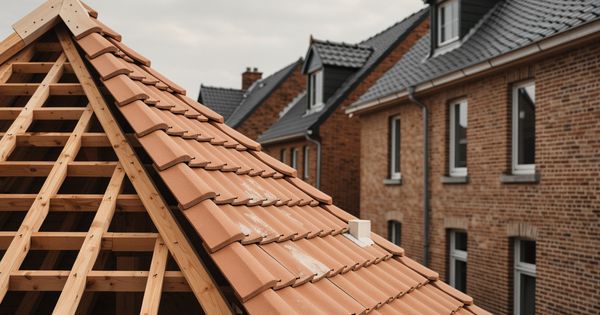
Installing panels designed to last for decades on a roof that will need replacing in five years can be a very bad move.
Before installation, you should examine:
- the condition of the roof covering;
- the roof structure;
- the waterproofing;
- the fixings;
- any potential leaks;
- the age of the roof.
Dismantling and later reinstalling the panels represents an additional cost.
8. Beware of roof moss removal sold with photovoltaics
Some companies use the photovoltaic sales visit to simultaneously offer:
- moss removal;
- cleaning;
- water-repellent treatment;
- roof painting;
- roofing repairs.
This work is not necessarily useless.
But its necessity and price should be assessed separately.
A salesperson who claims after a few minutes that the roof absolutely must have a treatment costing several thousand euros before the panels are installed must be able to technically justify this claim.
9. Photovoltaics: a sector where scams exist
Unfortunately, the success of photovoltaics also attracts unscrupulous companies.
Warning signs include:
- aggressive sales tactics;
- demanding an immediate signature;
- 'offer only valid today';
- promise of free panels;
- unrealistic savings;
- credit presented as a mere formality;
- a very large down payment;
- a very new company;
- an address that is difficult to verify;
- undisclosed subcontracting;
- equipment not precisely identified;
- lack of clear insurance;
- vague commercial warranties.
Never sign just because a salesperson tells you the offer expires tonight.
A photovoltaic installation is an investment designed to last for many years. You must be able to take the time to check.
10. Itinerant traders: be extra cautious
Consumers should be particularly cautious of travelling teams offering roofing, moss removal, insulation or photovoltaic work directly at their homes.
Some cases reported in Europe involve travelling teams, sometimes referred to in common parlance as 'Gypsies', offering immediate work for quick payment.
Of course, a person's origin or supposed background does not determine whether a company is honest or not.
The real criteria must remain verifiable:
- company identity;
- company number or commercial register;
- address;
- VAT;
- insurance;
- references;
- written quote;
- general terms and conditions;
- warranties;
- professional bank account.
Do not hand over several thousand euros just because a team claims they can start work immediately.
11. Who will actually install the panels?
This is an often-forgotten question.
The company that sells the system is not always the one that installs it.
Ask clearly: 'Do your own technicians carry out the installation, or do you use a subcontractor?'
Subcontracting is not necessarily a problem.
But you need to know who will be working on your roof and who will be responsible if something goes wrong.
12. Check the company before paying the deposit
Before you pay, check as much as possible:
- legal existence;
- age of the company;
- financial situation;
- directors;
- address;
- VAT number;
- insurance;
- necessary certifications;
- customer reviews;
- any previous legal proceedings or bankruptcies;
- consistency between the bank beneficiary's name and the contracting company.
A beautiful website is no guarantee of solvency.
13. Beware of deposits
The deposit requested must be reasonable for the project.
An installer who demands a very large portion of the price several months before ordering or installing the equipment is transferring a significant part of the financial risk to the customer.
Before paying, ask yourself: What happens if this company disappears after I've paid?
14. Warranties: 25 years doesn't always mean 25 years
Adverts regularly talk about 20, 25 or even 30-year warranties.
But you need to distinguish between:
- the panel warranty;
- the performance warranty;
- the inverter warranty;
- the battery warranty;
- the installation warranty.
A 25-year performance warranty does not necessarily mean the installer will come and replace a panel for free in 24 years' time.
Read the terms and conditions.
15. COMPARE THE PRICE PER kWp
Let's assume:
Quote A: €8,000 for 4 kWp — Price: €2,000/kWp
Quote B: €9,500 for 6 kWp — Price: approx. €1,583/kWp
Quote B costs more in total but offers more capacity.
However, this comparison is still insufficient if the panels, inverters and services are different.
16. The cheapest quote can also be dangerous
An abnormally low price can hide:
- low-quality equipment;
- missing services;
- lack of suitable scaffolding;
- excessive subcontracting;
- limited warranties;
- inadequate electrical protections;
- additional work billed later.
The right price is therefore not necessarily the lowest price.
It is the fair price for a technically correct installation.
17. The keywords consumers search for before signing
Internet users often search for: photovoltaic panel price 2026, photovoltaic installation cost, solar panel quote, photovoltaic quote too expensive, solar panel price per m², 5 kWp installation cost, best photovoltaic installer, photovoltaic panel scam, photovoltaic installer reviews, solar panel profitability, is a solar battery worth it, solar battery price, micro-inverter or string inverter, how much does a photovoltaic installation cost, how to check a photovoltaic quote, solar panel deposit, solar panel warranty, reliable photovoltaic company.
But finding an average price online doesn't tell you if your specific quote is reasonable.
18. Why can two photovoltaic quotes have very different prices?
Because a quote doesn't just contain panels.
The difference can come from:
- the manufacturer;
- the efficiency;
- the inverter;
- any micro-inverters;
- the mounting system;
- the battery;
- the roof difficulty;
- the scaffolding;
- the cabling;
- the protections;
- the warranties;
- the labour;
- the sales margin.
A 20% to 30% difference does not, therefore, automatically mean one contractor is too expensive.
However, a significant difference should be explainable.
Before you sign: have the quote analysed
A photovoltaic quote must be analysed as a whole: price + equipment + capacity + efficiency + installation + company + warranties + payment terms.
This is precisely where checking a quote makes perfect sense.
ECV – EURO CONSTRUCT VERIFY allows you to approach a works quote with a control-based logic: price consistency, technical elements, company information and points requiring special attention before you commit.
A few minutes spent checking a quote can prevent several years of problems.