Two quotes for '12 triple-glazed uPVC windows' can differ by several thousand euros. Material, profile, glazing, U-values, installation: here's what you need to compare.
You've received a quote for €8,000, €15,000, €25,000 or even €40,000 to replace the windows and frames in your home and you're wondering: 'Is this a fair price for my windows?'
The answer doesn't just depend on the number of windows. Two quotes for '12 triple-glazed uPVC windows' can be thousands of euros apart while hiding extremely different products.
In 2026, you need to compare, at a minimum, the frame material, the profile manufacturer, the glazing, the insulation values, the hardware, the dimensions, the opening type, the manufacturing quality and, above all, the quality of the installation.
Because an excellent window that is badly measured or poorly installed can become a very expensive bad window.
1. uPVC, aluminium, wood or steel: which to choose?
There is no single best material.
uPVC: Generally offers an excellent balance of price, insulation and maintenance. It can provide excellent thermal performance, but not all uPVC is created equal: the number of chambers, reinforcements, thickness, seals, weld quality, profile stability and hardware all affect the final quality.
Aluminium: Particularly suitable for large picture windows, contemporary architecture, slim profiles, sliding doors and large dimensions. A modern system must have an effective thermal break.
Wood: Excellent natural insulation, aesthetics, repairability and potential longevity. It is particularly relevant for older houses and character properties. However, pine, meranti and oak are not comparable.
Iron / steel: A more specialist market, popular for industrial architecture, glass extensions, heritage renovations and slim profiles. Modern steel systems with a thermal break can be very high-performing but are generally expensive.
2. Wood-aluminium: the smart high-end option
The principle combines wood on the inside with an aluminium shield on the outside. This retains the visual warmth and qualities of wood while better protecting the external face from the elements. It is generally a premium solution.
3. Double or triple glazing?
Modern high-performance double glazing can have a Ug-value of around 1.0–1.1 W/m²K. High-performance triple glazing often goes down to around 0.5–0.7 W/m²K.
The lower the number, the better the thermal insulation. But triple glazing is not automatically the best investment for every home: it must be part of a coherent energy renovation strategy.
4. Ug, Uf AND Uw: DO NOT CONFUSE THEM
Ug = performance of the glazing only.
Uf = performance of the frame / profile.
Uw = performance of the entire window.
If a salesperson quotes a 'U-value of 0.6', ask immediately: Ug or Uw? A glazing Ug-value of 0.6 does not mean the entire window has a Uw-value of 0.6.
5. Beware of the weight of triple glazing
Triple glazing is heavy. For a large window or a French door, it requires a suitable profile, proper reinforcements, and hinges and hardware that are sufficiently robust. An undersized assembly can lead to sagging, poor closing, friction and warping.
6. Belgium: prices and market in 2026
For a standard window, supplied and installed, you can expect ballpark figures of around €500 to €900 for uPVC, €800 to €1,400 for aluminium, €900 to €1,600 for wood, and €1,100 to €1,800 for wood-aluminium, depending on dimensions, glazing, range and finishes.
The Belgian market is mature and offers both locally manufactured products and those assembled in other European countries.
7. France: an extremely vast market
You'll find uPVC, aluminium, wood and composite wood-aluminium. uPVC generally remains the budget-friendly option, while aluminium is prominent for large windows and contemporary architecture.
Beware of quotes that only state 'double-glazed uPVC window' without specifying the profile manufacturer, thickness, Uw, Ug, glazing type, spacer bar, hardware and installation method.
8. Germany: a justified reputation for quality?
Germany has a long-standing window and profile industry, with a strong culture of thermal performance, triple glazing and technical hardware.
But a 'German profile' does not mean a 'window made in Germany'. A Romanian, Polish, Belgian or Spanish factory can perfectly well manufacture a window with a German-origin profile system, and do it remarkably well.
9. Netherlands: triple glazing and energy renovation
The Netherlands has extensively developed HR++ and triple glazing. The market places great importance on the overall energy performance of the window and the quality of the renovation.
10. Luxembourg: the same product can cost more
Labour and sales costs can be higher than in several neighbouring countries. A product made in Germany, Belgium or Poland may therefore be sold for significantly more once installed in Luxembourg.
Country of manufacture ≠ country of sale ≠ installation price.
11. Switzerland: high performance, but high prices
The Swiss market is particularly demanding in terms of insulation, airtightness, installation quality and energy performance. High-end wood, wood-aluminium and aluminium solutions are prominent. However, labour costs make installations significantly more expensive than in much of the European Union.
12. Austria: a culture of very high-performance windows
Austria has a strong tradition of low-energy construction and high-performance joinery. Triple glazing and wood-aluminium solutions are particularly well-developed, with a significant premium offering.
13. Spain: windows that have improved enormously
The Spanish industry now produces excellent joinery. In the south of the country, the issue is not only preventing heat from escaping, but also stopping solar heat from entering.
You need to look at the solar factor (g-value), solar control glazing, Low-E coatings, orientation and solar shading. Extremely insulating triple glazing that is poorly chosen for the Spanish sun is not necessarily optimal.
14. Portugal: profile, sealing and climate
Portugal has competitive manufacturers. For hot regions, solar control and the quality of the seals are essential. On facades exposed to the Atlantic, you must also consider wind, driving rain and the corrosion resistance of the components.
15. Italy: design and technical joinery
Italy has significant expertise in aluminium, wood, minimalist systems, large windows and architectural joinery. High-end Italian products can be among the most sophisticated solutions on the European market.
16. Poland: the European giant not to be underestimated
Poland has become a major force in European window manufacturing. You can find everything from very low-cost to mid-range and excellent high-end products.
Saying 'it's Polish, so it must be low-quality' is technically false. The real question is: which manufacturer, which profile, which glazing, which hardware and what quality control?
17. Romania: cheap does not necessarily mean bad
Lower production costs allow some manufacturers to be very competitive. A window made in Romania can use recognised European profiles, glazing from major glass manufacturers, and German or Austrian hardware.
It can therefore be excellent. But the market also includes very low-cost products: you must compare the technical specifications, not the flag.
18. Greece: interesting expertise in aluminium
Greece has a significant aluminium industry, with systems suited to large openings, the Mediterranean climate, sliding doors and contemporary architecture. Some Greek ranges can compete with more expensive Western solutions.
19. Czech Republic, Slovakia, Hungary and Central Europe
Central Europe has a highly developed joinery industry. Manufacturers often use components from the same major European suppliers. A window assembled in the Czech Republic or Slovakia is therefore not necessarily very different technically from one assembled in Germany.
20. UNITED KINGDOM: uPVC REMAINS VERY POPULAR
The United Kingdom has a long tradition of uPVC windows. The market has its own specific features: sash windows, casement windows, bow windows, bay windows and Victorian houses. A direct comparison with a Belgian or German tilt-and-turn window is therefore not always relevant.
21. Can you classify windows by country?
Only with extreme caution.
- Very strong technical / premium reputation: Germany, Austria, Switzerland.
- Very good industrial standard: Belgium, Netherlands, France, Italy.
- Excellent quality-to-price ratio and strong industrial capacity: Poland, Czech Republic, Slovakia.
- Very good expertise in aluminium / warm climates: Spain, Portugal, Greece, Italy.
- Very competitive prices, quality to be checked depending on the manufacturer: Romania, Bulgaria and some South-Eastern European producers.
This classification should never be used to judge an individual window. The brand, the product range, the technical specifications and the actual manufacturing are more important than the country.
22. The €300 window and the €800 window can look identical
Two white uPVC windows of the same size, both triple-glazed, can hide major differences: budget or premium profile, reinforcements, hardware, seals, warm-edge spacer bar, glazing quality, airtightness and the actual Uw-value.
23. The 'warm edge': a small detail that makes a real difference
The thermally improved perimeter spacer, often called a warm-edge spacer, reduces the thermal bridge at the edge of the glazing and can lower the risk of condensation on the inner edges.
24. Acoustic glazing
Near a motorway, airport, railway line or in a city centre, don't just ask for triple glazing: ask for the acoustic performance. Well-designed asymmetric acoustic glazing can sometimes be more effective against certain noises than standard triple glazing.
25. Safety glass
For French doors, large windows, easily accessible windows or as part of a balustrade, laminated or safety glass may be required or recommended depending on the situation and regulations. Ask for its exact composition.
26. Special windows
Arched, bull's-eye, trapezoid or triangular windows, large sliding doors, lift-and-slide doors, pocket doors, minimalist frames, glass facades or pivot doors can significantly increase the price. A special shape can lead to a substantial surcharge compared to a standard rectangle.
27. Measuring up: a few millimetres can cost you dearly
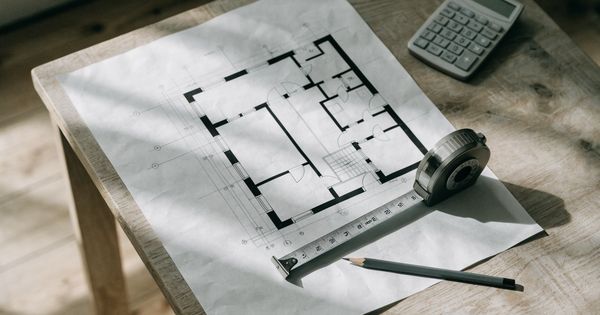
A custom-made window that is measured incorrectly can become unusable. Before manufacturing, the installer must check the width, height, plumb, level, squareness, depth, threshold, sills, opening direction, available space and interior/exterior finishes.
A 20 mm error repeated over 15 windows can become a financial disaster.
28. Beware of the salesperson who measures up in five minutes
An initial sales survey can be used to establish a price. But before manufacturing, there should normally be a final technical survey. Ask: 'Who is financially responsible for a measurement error?' The answer must be clear.
29. The installation is almost as important as the window
You can buy the best triple glazing on the market: if it's poorly installed, you can get air leaks, thermal bridges, condensation, water ingress and mould. The performance stated in the lab does not guarantee the actual performance on site.
30. PU foam alone: is it enough?
Polyurethane foam can contribute to the perimeter insulation. But a good installation must also correctly manage airtightness on the inside, insulation in the middle, and protection against rain and moisture on the outside. The wall-to-window join must not become the weak point of the installation.
31. Installing over the old frame or a full removal?
Installing over the existing frame is quicker and often cheaper, but it can reduce the glass area and retain a thermally poor part of the old assembly.
A full removal requires more work and finishing, but may be preferable when the old frame is degraded or performs poorly. Two quotes using different methods are not offering the same service.
32. The finishing trap
A quote of €9,800 for 12 windows might seem very attractive. But does it include removal, disposal, window boards, plastering, silicone sealing, external trim, wall repairs and painting?
An all-inclusive quote of €11,500 may ultimately cost less than a €9,800 quote to which you have to add €3,500 for finishing.
33. The keywords people search for
window prices 2026; uPVC window prices 2026; uPVC window price m2; aluminium window prices; wood window prices; triple glazing price; double or triple glazing; triple glazing price m2; cost to replace house windows; cost of 10 windows; cost of 15 windows; best uPVC windows; German windows quality; Polish windows reviews; Romanian windows quality; Romanian windows reviews; Spanish windows; Greek aluminium windows; window Uw value; double glazing Ug value; window insulation value; aluminium patio door price; window quote too expensive; how to compare two window quotes; window installation cost; window measurement error; bad window installation; which window brand to choose.
All these searches lead to the same question: 'ARE THE WINDOWS I'M BEING OFFERED ACTUALLY WORTH THE ASKING PRICE?'
34. The ECV method for comparing a window quote
ECV recommends looking for the following as a minimum:
- Window manufacturer
- Exact profile reference
- Country and factory of manufacture, if relevant
- uPVC / aluminium / wood / steel
- Double or triple glazing
- Exact glazing composition
- Ug-value of the glazing
- Uw-value of the entire window
- Solar factor (g-value) where relevant
- Acoustic performance
- Safety glass
- Hardware
- Reinforcements
- Opening type
- Exact dimensions
- Installation method
- Removal of old windows
- Finishing
- Guarantee
- Final price including VAT
A quote that simply states '12 triple-glazed uPVC windows: €14,500' is technically very poor.
35. Example: two quotes for 15 windows
COMPANY A: €12,900 — uPVC, triple glazing, installation included.
COMPANY B: €16,800 — Premium uPVC, identified profile, triple glazing with Ug 0.6, stated Uw-value, warm-edge spacer, laminated glass where required, premium hardware, full removal, complete perimeter sealing and finishing included.
The first quote is €3,900 cheaper. Is it really less expensive? It's impossible to say, because we know very little about what is being sold.
36. Quality has no nationality
An excellent window can be German, Belgian, Polish, Romanian, Spanish, Greek, Italian, Austrian or French. And a bad window can come from exactly the same countries.
The European market is extremely integrated: the profile comes from one country, the glazing from another, the hardware from a third, and assembly happens in a fourth. The flag on the brochure is not a technical specification sheet. Compare the measurable characteristics.
Conclusion: the best window is one that will still perform well once it's installed
In 2026, comparing windows on price alone is a mistake. Simply comparing uPVC versus aluminium or double versus triple glazing is also not enough.
You need to analyse the complete system: FRAME + GLAZING + HARDWARE + MEASUREMENTS + INSTALLATION + SEALING + FINISHING.
A perfectly manufactured Romanian or Polish window with premium components, installed correctly, can be a better deal than a product sold for twice the price under a 'German' image.
Conversely, importing cheap windows becomes a false economy if the measurements are wrong, the hardware is undersized, the real Uw-value is poor, after-sales service is non-existent, or no one honours the guarantee in your country.
The price is important. But the quality you actually get for that price is more so.