Two electrical quotes for the same work can vary wildly in price. Here's what makes up the cost of an installation and what a proper quote must include.
You receive a quote for €4,800, €9,000 or €18,000 for electrical work and you immediately wonder: is this a reasonable price?
It's a fair question. In electrics, two quotes for what appears to be the same job can vary considerably.
But just comparing the final price is dangerous.
An electrical quote depends on the number of sockets and light points, but also on the consumer unit, protective devices, wiring, chasing, earthing, the type of fittings, any smart home systems, the applicable standards and, above all, the condition of the existing installation.
A poorly executed electrical renovation isn't just a bad deal: it can pose a fire or electrocution risk.
So, here's what you really need to check before signing an electrical quote.
1. How much does electrical work cost in 2026?
Obviously, there is no single price that applies across Europe.
The price depends on factors including:
- the country;
- the cost of labour;
- the type of building;
- the surface area;
- accessibility;
- the number of circuits;
- the number of sockets and switches;
- the consumer unit;
- the need for chasing;
- the earthing;
- the finishes;
- the quality of the fittings;
- home automation;
- and the condition of the existing installation.
For a major electrical renovation of a house or flat, you'll quickly need several thousand euros.
Belgium
In Belgium, the cost of a complete electrical renovation can frequently range from several thousand to over €15,000, or even more for a large house or a complex installation.
For a relatively standard renovation, an estimate in the region of €80 to €150/m² can sometimes serve as an initial indicator, but it is certainly not an absolute rule.
A high-end installation, home automation, an EV charging point, a large new consumer unit or numerous modifications can considerably increase the budget.
You must also factor in the installation's compliance inspection where one is required.
France
In France, a complete electrical renovation can frequently be around €90 to €160/m², with significant variations depending on the region, the building and the level of finish.
A partial renovation can naturally cost much less.
In large cities and particularly in certain high-demand areas, the cost of labour can be substantially higher.
Germany
Germany has high technical requirements and relatively expensive skilled labour.
For a major renovation, budgets exceeding €100/m² are not unusual.
Modern installations including automation, energy management, photovoltaics, heat pumps or car charging can quickly become much more expensive.
The Netherlands
In the Netherlands, the cost of labour and the high demand for qualified electricians can also drive up prices.
A major electrical renovation of a home can easily cost several thousand euros.
Spain
Spain generally has lower labour costs than Belgium, France, Germany or the Netherlands.
But regional differences are significant.
Madrid, Barcelona, Marbella, the Balearic Islands or certain tourist areas can have much higher rates than those in less high-demand regions.
Portugal
Portugal generally remains competitive on labour costs.
However, electrical components from major European brands do not necessarily cost much less than elsewhere.
An unusually low quote should therefore also be examined with caution.
Italy
In Italy, prices vary greatly between the north and south of the country, as well as between large cities and rural areas.
The complexity and age of the building also play a major role.
These prices are only rough estimates.
The real goal isn't to see if your quote matches an online average, but to determine if its price is consistent with the work actually planned.
2. A €10,000 quote isn't necessarily expensive
This is one of the most common mistakes.
Someone receives a quote: Electrical installation: €10,500. They then ask, "Is that too expensive?"
It's impossible to give a serious answer without knowing what's in the quote.
For €10,500, is the company providing:
- 30 sockets or 70?
- a new consumer unit?
- new earthing?
- all the chasing?
- the making good?
- a complete rewire?
- the switches?
- the light fittings?
- the RCDs?
- the electrical diagrams?
- the handover or inspection?
- a network installation?
- an EV charging point?
The total price alone means almost nothing.
3. The number of electrical points is crucial
A proper quote should make it clear how many points are being installed.
An electrical point can be:
- a socket;
- a switch;
- a light point;
- a dedicated supply;
- a network socket;
- a cable outlet.
Imagine two identical houses. The first has 35 sockets. The second has 75. The price obviously cannot be the same.
A quote that simply states "Complete electrical installation: €12,000" without quantities or descriptions should therefore be clarified.
4. How much does an electrical socket cost?
This is a very common internet search: "Price of an electrical socket, including installation".
But the price depends heavily on the situation.
Installing an extra socket near an existing circuit is completely different from running a new line from the consumer unit.
The price can include:
- cable;
- conduit;
- back box;
- fitting;
- chasing;
- connection;
- labour;
- travel costs;
- making good.
So, a socket can cost a few dozen euros in some situations, and much more when a new supply needs to be created.
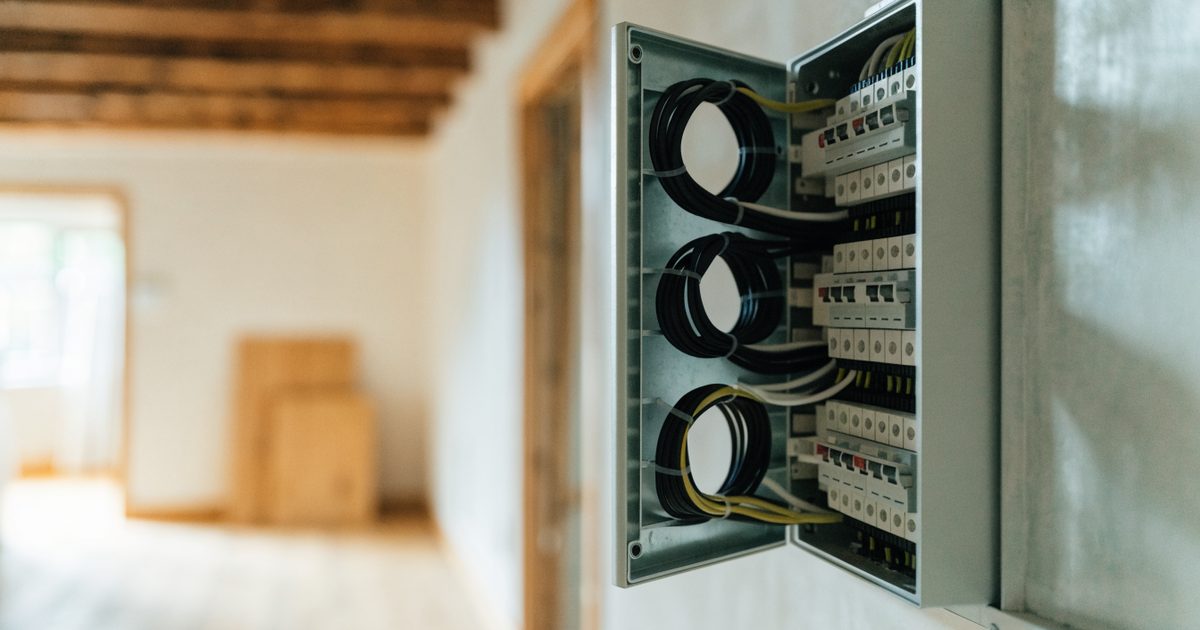
5. The consumer unit can be a significant part of the quote
The consumer unit is the heart of the installation.
You shouldn't just look at its size.
The quote should specify with sufficient clarity:
- the enclosure;
- the number of rows;
- the circuit breakers;
- the RCDs;
- specific protective devices;
- surge protectors where required or included;
- any contactors;
- home automation modules;
- available spare ways.
The brand of the equipment can also influence the price.
Well-known manufacturers like Schneider Electric, Legrand, Hager, ABB or Siemens have different ranges and price levels.
A quote that only says "New consumer unit: €2,500" without further detail doesn't allow for a proper comparison.
6. Be careful with old installations
Renovating a recently built house is not comparable to renovating a 1950s property.
In an old installation, an electrician might discover:
- old cables;
- damaged insulation;
- no earthing;
- hidden junction boxes;
- mixed-up circuits;
- modifications made by several owners;
- non-compliant cables;
- an outdated consumer unit;
- dangerous connections.
The work required can then be considerably more than what was visible during the first visit.
A good quote should explain what's included and how any unforeseen work will be handled.
7. Earthing is not a minor detail
Proper earthing is a crucial element of electrical safety.
In a renovation, you need to check if the existing earthing is sufficient or if additional work is needed.
Depending on the building, this may require:
- an earth rod;
- an earth loop;
- a protective conductor;
- equipotential bonding;
- additional connections;
- resistance measurements.
An extremely cheap offer that completely ignores this aspect deserves special attention.
8. The cost of chasing and making good
This is a classic source of conflict.
The client thinks they've ordered a complete electrical installation. The electrician thinks they've only quoted for the electrical work.
After the work is done, the client discovers dozens of channels cut into the walls. And they are told: "Plastering and filling aren't included."
The quote must clearly specify: Who opens up the walls? Who does the chasing? Who fills the channels? Who makes the walls good again?
A significant price difference between two quotes can simply be because one includes these services and the other doesn't.
9. Fittings: not all sockets are the same
The choice of switches and sockets can have a big impact on the budget.
A standard white range doesn't have the same price as fittings that are:
- designer;
- metal;
- glass;
- frameless;
- smart/connected;
- touch-sensitive;
- high-end.
In a large home with dozens of sockets and switches, the difference can amount to several thousand euros.
The quote should therefore state the brand or at least the planned range.
10. Home automation: watch the budget
KNX, smart lighting, automated blinds, connected heating, remote control, lighting scenes...
Home automation can turn a relatively simple electrical installation into a complex technical project.
The budget can quickly increase.
But most importantly: you need to know exactly what you are buying.
Ask:
- what system is being installed?
- is it open or proprietary?
- who will be able to program it in ten years?
- does the system work without a subscription?
- will the components still be available?
- how much does a future modification cost?
A house shouldn't become unusable just because an app or a server no longer exists.
11. EV charging point: not just a simple socket
With the rise of electric vehicles, many quotes now include an EV charging point.
You need to check:
- power of the charger;
- single-phase or three-phase;
- available power;
- cable;
- distance to the consumer unit;
- protective devices;
- dynamic load management;
- potential solar PV compatibility;
- configuration;
- grid connection.
A relatively cheap charging point might require significant electrical work.
12. Solar PV, heat pumps and electrics should be planned together
A modern home can include:
- solar PV panels;
- battery storage;
- a heat pump;
- air conditioning;
- an EV charger;
- a water heater;
- an electric kitchen;
- home automation.
All this equipment affects the electrical installation.
Renovating the consumer unit today without anticipating the equipment planned for tomorrow could force the owner to redo part of the work a few years later.
A good electrician should be able to anticipate these needs.
13. The quote must specify brands and materials
Be wary of an offer that only states: "Professional electrical materials: €4,500".
Ask what that includes.
It is better to know:
- the brand of the consumer unit;
- the brand of the protective devices;
- the range of fittings;
- the type of cables;
- part numbers for important equipment;
- any control systems.
This allows you to truly compare two quotes.
14. Labour: why do rates vary so much?
An electrician's hourly rate varies greatly depending on the country and region.
It depends on factors including:
- wages;
- social security contributions;
- insurance;
- vehicle;
- tools and equipment;
- certifications;
- experience;
- company structure.
Therefore, directly comparing the rate of a Belgian electrician with that of a Spanish or Portuguese professional doesn't make much sense.
Above all, you should check if the number of hours billed seems consistent with the work.
15. Beware of 'cash-in-hand' work
An electrician offers you: "€8,000 with an invoice, or €5,500 in cash."
The saving might seem appealing.
But what happens in the event of:
- a fire?
- electrocution?
- non-compliance?
- a breakdown?
- insurance issues?
- a dispute?
- reselling the property?
The initial savings can become insignificant compared to the consequences of a faulty installation.
For major electrical work, traceability is essential.
16. Beware of excessively large deposits
It is normal for a company to ask for a deposit to order materials and book a time slot for the work.
But a disproportionately large deposit should raise a red flag.
Before paying several thousand euros, check:
- the company's identity;
- its company registration number;
- its VAT number;
- its address;
- how long it has been in business;
- its insurance;
- its references;
- its terms and conditions;
- the bank account you are paying into.
Always ask yourself: What happens if the company disappears after I've paid?
17. An unusually low price can be more worrying than a high one
Three quotes:
Company A: €13,800
Company B: €12,600
Company C: €6,900
The natural reflex is to choose C. But why is it almost half the price?
Perhaps there is an excellent reason. But you need to find it.
The cheap quote may be hiding:
- fewer sockets;
- different materials;
- work not included;
- no making good;
- different protective devices;
- subcontracting;
- undeclared work;
- no inspection;
- later extras.
An unusually low quote deserves as much scrutiny as an unusually high one.
18. Who will actually do the work?
The company that issues the quote is not necessarily the one that will send the electricians.
Ask: "Will the work be carried out by your own staff or by subcontractors?"
Subcontracting is common and not necessarily a problem.
But you need to know who is coming to your property and who is responsible for the site.
19. Inspection and compliance: who handles it?
Regulatory requirements differ from one European country to another.
In Belgium, for example, the compliance of an electrical installation is closely linked to the RGIE regulations.
In other countries, other national regulations and standards apply.
The quote should specify:
- the documents provided;
- any diagrams;
- the planned inspections;
- the administrative steps included;
- what remains the client's responsibility.
Never assume that "everything is included". Ask for it in writing.
20. How to compare two electrical quotes
Don't just compare: €12,500 versus €10,800.
Instead, create a line-by-line comparison:
- number of sockets;
- number of switches;
- light points;
- circuits;
- consumer unit;
- protective devices;
- earthing;
- wiring;
- chasing;
- making good;
- fittings;
- data network;
- exterior work;
- home automation;
- EV charging point;
- inspection;
- travel costs;
- waste disposal;
- VAT.
Only after this comparison does the price really start to make sense.
21. Why can two quotes differ by 30, 40 or 50%?
Because two companies aren't necessarily quoting for the same thing.
One may have included high-end materials. The other, standard materials.
One includes 70 sockets. The other, 45.
One includes chasing and making good. The other doesn't.
One is replacing the entire consumer unit. The other is keeping part of the existing installation.
So, a significant difference isn't automatically a scam. But it must be explainable.
22. Red flags to watch for before you sign
Be particularly vigilant when you see:
- an extremely vague quote;
- a lump sum price with no quantities;
- an unknown brand of materials;
- cash payment demanded;
- a very high deposit;
- no company registration number;
- a company that is impossible to locate;
- a promise of compliance without an inspection;
- a refusal to detail the services;
- a price that is extremely lower than competitors';
- pressure to sign immediately;
- a "discount only valid today".
A reputable contractor should normally be able to explain their price.
23. Keywords people search for before signing an electrical quote
People often search for: electrician prices 2026, house rewire cost, electrical installation cost per m², electrical quote too expensive, consumer unit price, socket installation cost, electrician hourly rate, cost to bring electrics up to code, electrical compliance cost, flat rewire cost, how much does an electrician cost, electrician quote for house, cost to rewire a house, how to check an electrical quote, electrical quote reviews, reliable electrician, EV charger installation cost, home automation cost, earthing installation cost, electrical quote scam.
But an average price found on Google will never allow you to determine precisely if your quote is reasonable.
You have to analyse its content.
So, how can you tell if the price of your electrical quote is fair?
You need to look at the quote as a whole: price + quantities + materials + labour + compliance + safety + company + guarantees + payment terms.
A €15,000 quote can be perfectly justified.
An €8,000 quote can be far too expensive.
And a €5,000 quote might be hiding the fact that essential services simply aren't included.
The real challenge, therefore, isn't to find the cheapest quote.
It's to determine whether you are paying a fair price for work that is properly defined and properly carried out.
This is precisely the logic of ECV – EURO CONSTRUCT VERIFY: to analyse a works quote by looking for price inconsistencies, technical elements to check, missing or vague services, and information about the company before the client commits.
Because a mistake on a painting quote can be annoying.
A mistake on an electrical installation can be dangerous.