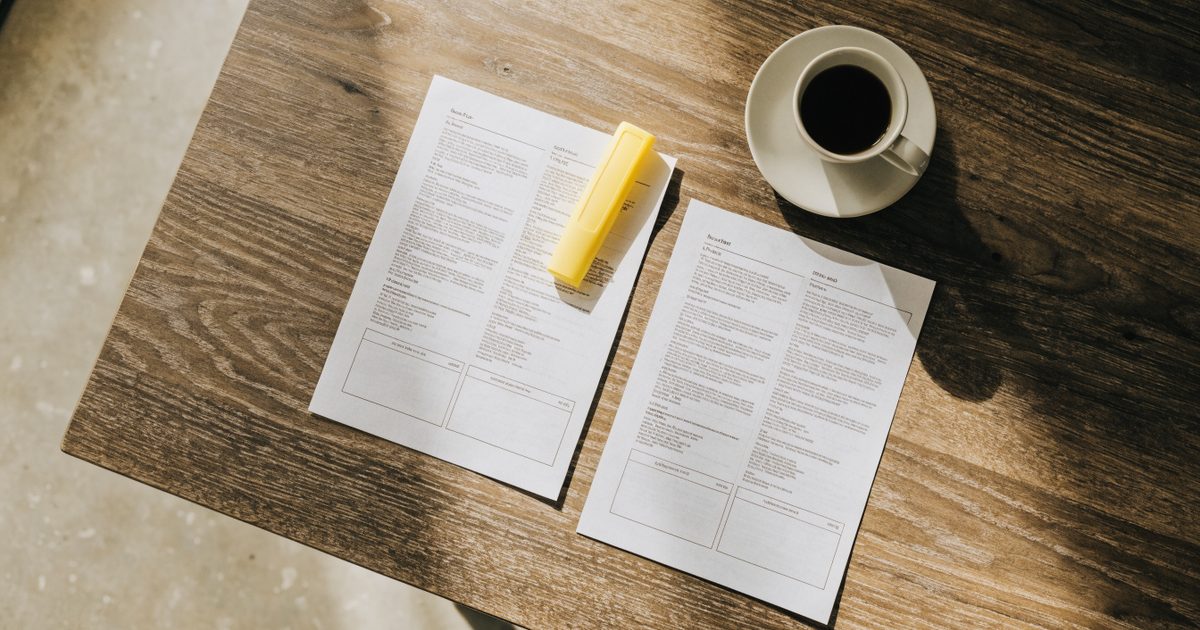
€28,500 versus €36,900: the choice seems obvious, but the two companies may not be selling the same thing. The method for comparing the content, not just the total.
You have requested two quotes for the same work.
The first comes to €28,500. The second to €36,900.
At first glance, the choice seems obvious: why pay an extra €8,400?
Because these two companies may not be selling you the same thing at all.
Comparing two quotes for building work just by looking at the final amount is probably one of the most common mistakes before a renovation.
The real question isn't: 'Which is the cheapest quote?' But: 'WHY ARE THESE TWO QUOTES DIFFERENT?'
Here is a simple method to find out.
1. Put the two quotes side by side
Don't read the first quote today and the second one tomorrow. Physically place them side by side.
Then compare the work in the same order: demolition, preparation, materials, installation, finishing, waste removal and additional work.
You will often immediately discover that some services included in one quote have completely disappeared from the other. This is the first thing to identify.
2. Compare item by item, not total by total
Let's take two quotes for a roof.
COMPANY A — Roofing: €12,500; Insulation: €5,800; Zinc work: €3,700; Scaffolding: included; Waste removal: included. TOTAL: €22,000.
COMPANY B — Roofing: €10,900; Insulation: €5,200; Zinc work: €3,100. TOTAL: €19,200.
Company B seems €2,800 cheaper. But its quote mentions neither scaffolding nor waste removal. If these then have to be added for €3,500, the seemingly cheaper quote ultimately becomes the more expensive one.
The comparison must therefore be made line by line.
3. Create three columns: IDENTICAL / DIFFERENT / MISSING
This is probably the most effective method.
IDENTICAL: both companies are genuinely offering the same thing.
DIFFERENT: both companies offer the item, but with a difference in material, quantity or method.
MISSING: the item only appears in one of the two quotes.
This third category is particularly important. A cheaper quote sometimes simply contains less work.
4. Compare quantities before prices
Imagine: Company A: 145 m² of insulation at €78/m². Company B: 180 m² of insulation at €70/m².
Per m², B is cheaper. But in total: A = €11,310; B = €12,600.
So, before comparing the unit price, check that both companies have calculated the same quantity.
If the surface areas differ significantly, ask why. This is particularly useful for roofing, façades, insulation, tiling, painting, plastering, decking and cladding.
5. Two products that look alike are not necessarily equivalent
Two quotes state 'Roof insulation'. That seems identical. But the first might specify 12 cm of one type of insulation and the second 20 cm of another product with a different performance.
It's the same problem with PVC windows, photovoltaic panels, heat pumps, boilers, waterproofing membranes, tiles, paints, floor tiles or taps.
So never just compare the generic product name. If possible, compare: BRAND + REFERENCE + QUANTITY + PERFORMANCE + INSTALLATION.
6. Compare the promised final result
Ask this question: 'What exact state will my home be in when you have finished?'
One company might include removal, installation, filling, plastering, painting and cleaning in its price. The other might only include removal and installation.
Technically, both have carried out the requested work. But with the second company, you might be left with €4,000 of finishing work to get done.
So compare the finished project, not just the main job.
7. Compare the exclusions
Look for phrases like: 'not included', 'to be provided by the client', 'supply not included', 'as required', 'extra', 'not covered'.
Make a list for each company. Example: QUOTE A — interior painting, electrical connection. QUOTE B — scaffolding, waste removal, painting, connection, interior finishing.
You will immediately have a better understanding of why one quote is cheaper.
8. Compare the price at the right level
The price per m² is very useful, but only when the services are comparable.
Example: Company A: €95/m². Company B: €118/m². B appears to be 24% more expensive.
But if B includes surface preparation, a superior finish and waste removal while A does not, this difference may be perfectly logical.
The unit price should therefore be used as a comparison tool, not as an automatic verdict.
9. 2026 prices are not 2020 prices
When comparing your quotes with prices found on the internet, always check the date.
According to Eurostat, between 2015 and 2025, the construction prices for new residential buildings increased by 48.2% in the European Union. However, the increase has recently slowed: +2.3% in 2024 and +1.3% in 2025.
The differences between countries are considerable: over the 2015-2025 period, Eurostat notes, for example, an increase of 166.1% in Bulgaria compared to 17% in Italy.
So, compare with your country, your region and sufficiently recent references.
10. Compare the VAT
Two totals can seem different simply because they are not presented in the same way.
QUOTE A: €30,000 excl. VAT. QUOTE B: €32,500 incl. VAT. Which is actually cheaper? It's impossible to say without knowing the applicable rate.
The rules vary between European countries. In Belgium, certain work carried out in a private dwelling over ten years old may, under certain conditions, benefit from a VAT rate of 6% instead of 21%.
On €30,000 excl. VAT, that represents €31,800 at 6% versus €36,300 at 21%, a difference of €4,500.
Since 2025, however, certain heating systems using fossil fuels have been excluded from the reduced Belgian rate and are subject to the standard rate of 21%, subject to the transitional measures in place.
The comparison must therefore always be made on the amount that is actually payable.
11. Compare the down payments
Two companies can offer the exact same price: €40,000. But the first asks for €4,000 on ordering and the second for €20,000 before starting.
The final cost is identical. Your financial exposure is not.
So also compare: down payment + payment schedule + actual progress of the work. The cheapest quote is not necessarily the one that exposes you to the least risk.
12. Compare the timelines
Company A: start in two months – estimated duration: four weeks. Company B: start next week – estimated duration: not specified.
The second seems more appealing. But if the site remains open for three months, the advantage quickly disappears.
For some projects, the timeline can also have a real economic value: temporary housing, rent, closure of a business, a delayed move...
Time is part of the offer.
13. Compare what happens in case of unforeseen issues
Ask both companies the exact same question: 'If you discover an unforeseen problem, what happens?'
One company might reply that it will provide a supplementary price and wait for your approval before carrying out the work. Another might say it will do what is necessary and sort it out afterwards.
The difference is significant. A slightly more expensive but better-defined offer can ultimately be much more predictable.
14. Compare the guarantees and after-sales service
The project is finished. Six months later, a leak appears. What happens?
Compare the stated guarantees, manufacturer warranties, documents provided after the work, after-sales service and the procedure in case of a problem.
A difference of €1,500 on a €50,000 project can become secondary if one of the companies offers significantly better follow-up.
15. Don't just compare two companies: compare two risks
COMPANY A: €34,500 — very good price, high down payment, materials not detailed, numerous exclusions.
COMPANY B: €38,000 — €3,500 more expensive, lower down payment, precisely identified products, finishing included, clear schedule.
The question is no longer simply: 'Is B worth €3,500 more?' But: 'What else do I need to add to A to genuinely get the same thing?'
This is a much more relevant way to compare.
16. Create an 'adjusted price'
Take the cheaper quote. Mentally or in a spreadsheet, add the services that are missing to make it comparable to the second one.
QUOTE A — Initial price: €27,000 + estimated scaffolding: €2,500 + waste removal: €1,200 + painting: €2,000. ADJUSTED PRICE: €32,700.
QUOTE B — All-inclusive: €31,900.
Quote B, initially €4,900 more expensive, ultimately becomes €800 cheaper for comparable services.
This is exactly why a ranking based solely on the total amount can be misleading.
17. Do the red line test
Take a red marker and, on each quote, mark everything that is different.
Then an orange marker for anything that is not clear enough, and a green marker for everything that is genuinely comparable.
If, after this exercise, your quote is covered in red and orange, you probably don't yet have enough information to make a choice.
18. And what if the two quotes are completely different?
This is common. You ask for the exact same work and receive two proposals that are impossible to compare.
This is not necessarily a bad sign. The two contractors may simply have come up with two different technical solutions.
In this case, don't immediately try to find out which is cheaper. Ask each of them: 'Why did you choose this solution?'
You might discover that one company is only treating the symptom while the other is treating the cause of the problem.
19. European rules provide a useful principle: the price must be understandable
In the European Union, before purchasing a good or service, the consumer must receive clear and understandable information, particularly on the main characteristics, the total price including taxes and charges, the payment arrangements and the identity of the professional.
European rules on price information also have a simple objective: to enable consumers to more easily compare similar offers and make an informed decision.
For building work, however, national regulations remain essential and may add specific obligations.
20. The ECV method for comparing two quotes
To simplify, compare your two offers on 7 criteria:
- REAL TOTAL PRICE — VAT and costs included.
- QUANTITIES — Are both companies really quoting for the same areas and volumes?
- MATERIALS — Are the products equivalent?
- WORK INCLUDED — What will each company actually do?
- EXCLUSIONS — What will you have to pay for separately?
- PAYMENTS AND TIMELINES — What down payment? What payment schedule? What duration?
- OVERALL RISK — Which quote leaves the fewest areas of uncertainty?
The best quote will not necessarily get the best result in each of the seven categories. But you will finally understand why the two prices are different.
21. Google searches used before choosing
Internet users search for terms such as: compare two building quotes; how to compare tradesmen's quotes; two very different quotes; price difference between two quotes; which quote to choose; building quote comparator; cheaper building quote; how to choose between two contractors; compare tradesmen's prices; building work prices 2026; roof quote comparison; house renovation quote comparison; compare renovation quotes; two tradesmen different prices; why are two quotes different; which contractor to choose.
All these searches hide the same question: 'AM I REALLY COMPARING THE SAME THING?'
22. ECV: comparing what is truly comparable
Comparing two quotes manually can become complicated when each company presents its offer differently.
One works per m². The other on a fixed-price basis. One details fifteen items. The other presents fifty. One includes certain services. The other lists them as optional.
It is precisely in this type of situation that analysis becomes useful.
The logic of Euro Construct Verify – ECV is to examine the quote beyond just the final amount: price + quantities + services + materials + technical consistency + available information about the company.
Because comparing two quotes is not about looking for the smallest number. It is about determining which offer truly best matches the project you want to have carried out.
Conclusion: the cheapest quote is not always the cheapest
Two quotes can have a 10%, 20% or even 40% difference without one of the companies necessarily trying to overcharge you.
They may simply not have quoted for the same thing.
Before you choose: align the services, compare the quantities, check the materials, add the missing items, compare the down payments and calculate the actual payable price.
Only then, look at which one is cheaper.
Because the best comparison is not QUOTE A versus QUOTE B. It is SERVICES A + RISKS A + PRICE A versus SERVICES B + RISKS B + PRICE B.
It is at this point that the two quotes become truly comparable.
European and official sources
- Eurostat — Construction prices in the European Union, juin 2026. Between 2015 and 2025, the construction prices for new residential buildings increased by 48.2% in the European Union; the annual increase slowed to 1.3% in 2025.
- European Commission — Consumer Rights Directive. European framework harmonising, among other things, certain pre-contractual information obligations towards consumers.
- Your Europe — contractual information. The professional must, in particular, clearly communicate the main characteristics of the service, the total price including taxes and charges, as well as the payment and performance arrangements.
- SPF Finances Belgique — VAT on renovations. Under certain conditions, some renovation work on a private dwelling over ten years old can benefit from the 6% VAT rate instead of 21%.
- SPF Finances Belgique — fossil fuel heating. The VAT regime was changed from 2025 for certain heating systems running on fossil fuels.