The basic principle, the four stages of the heating cycle, the main types of heat pump, efficiency and electricity use, cold-weather performance and radiators in older homes: what to check before accepting a quotation.
A heat pump uses electricity to collect heat from the air, ground or water and transfer it into a building. Depending on the system, it can heat rooms, supply domestic hot water and provide cooling. Its main advantage is that it moves existing heat, so it can deliver several units of heat for each unit of electricity it consumes. [13]
The operating principle is the same across Europe. The right installation, however, depends on the local climate, the building and the way heat is distributed indoors. Understanding these factors helps you assess both the equipment and the quotation.
The basic principle of a heat pump
A refrigerator removes heat from its interior and releases it into the kitchen. A heat pump uses the same basic technology to collect heat from a source and deliver it where it is useful. Even outdoor air below 0 °C contains thermal energy that a suitable heat pump can extract. [16]
Electricity powers the compressor and other components. The heat delivered to the home combines energy taken from the surroundings with the energy used to operate the machine.
For example, a heat pump might use 1 kWh of electricity and collect approximately 3 kWh of environmental heat to deliver 4 kWh of heat. This is an illustration of energy transfer, not a guaranteed result for every installation. A kilowatt-hour, or kWh, measures an amount of energy. [1]
The four stages of the heating cycle
Most domestic electric heat pumps use a vapour compression cycle. A fluid called a refrigerant circulates in a sealed circuit, repeatedly changing pressure, temperature and physical state. [2]
- Heat absorption. In the evaporator, the refrigerant absorbs heat from the air, ground or water. At this low pressure, it can evaporate at a low temperature and become a gas.
- Compression. An electrically powered compressor compresses the refrigerant gas. Its pressure and temperature rise, making it hot enough to transfer useful heat into the building.
- Heat delivery. In the condenser, the hot refrigerant releases heat to indoor air or to a water-based heating circuit. As it loses heat, the refrigerant condenses back into a liquid.
- Expansion. The refrigerant passes through an expansion valve. Its pressure and temperature fall, preparing it to absorb heat again. The cycle then repeats.
In a water-based system, the refrigerant stays separate from the water circulating through radiators or underfloor pipes. An air-to-water heat pump also transfers heat without blowing outdoor air through the central heating system. [16]
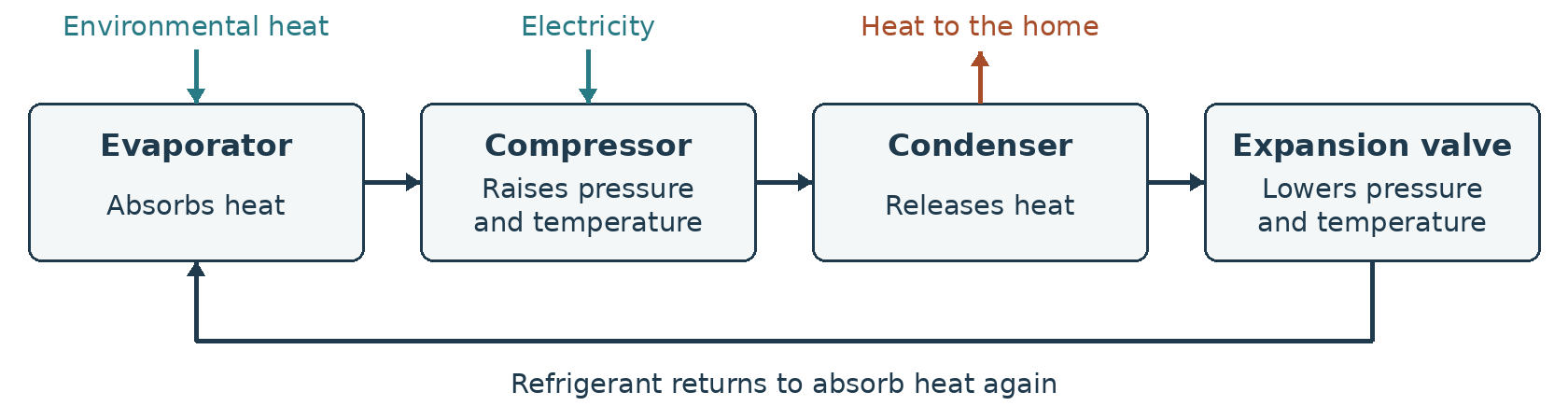
Figure 1. Simplified cycle in heating mode. The main loop shows refrigerant flow; the other arrows show energy entering or leaving. Based on source [16].
The main types of heat pump
The names usually describe where the heat comes from and how it is delivered. The main domestic options are outlined below. [3]
Type
Heat source
How heat reaches the home
Air-to-air
Outdoor air
Indoor units or ducts deliver warm air. Reversible models also provide cooling. Domestic hot water usually needs a separate system.
Air-to-water
Outdoor air
Heated water supplies radiators, underfloor heating or suitable fan convectors. A compatible hot-water cylinder can be included.
Ground-source
The ground
Buried horizontal pipes or boreholes collect heat, usually through a circulating fluid. Heat is usually distributed indoors through a water circuit.
Water-source
Groundwater or surface water
A suitable water source provides heat. Feasibility depends on the site, water conditions and any required permissions.
Ground-source systems require excavation or drilling. Water-source systems need an appropriate source and specialist assessment. An air-source system avoids these ground collectors but needs a suitable outdoor location. [3]
Heating rooms and producing hot water
Space heating and domestic hot water serve different purposes. Space heating warms rooms. Domestic hot water supplies taps, showers and baths. A heat pump installation may provide one or both services. [1]
When hot water is included, the design must cover household demand, cylinder capacity, reheating time and the required temperature controls. An existing cylinder may need replacement or adaptation. Ask the installer to explain the hot-water arrangement separately from the room-heating system. [4]
Cooling in summer
A reversible heat pump can move heat out of the building in summer. This is a common function of air-to-air systems, but cooling is not available on every heat pump. [1]
For a water-based installation, the indoor equipment and controls must also support cooling. Fan coils or a carefully designed surface-cooling system may be needed. Ordinary radiators should not be assumed to provide effective room cooling. Condensation control is essential wherever cold surfaces could attract moisture. [4]
Understanding heat pump efficiency
Three terms commonly appear in technical information. They describe different ways of assessing performance and should not be treated as interchangeable. [5, 17]
Term
Meaning
How to use it
COP
Coefficient of performance. Heat output divided by electrical input at stated operating conditions.
A COP of 4 means four units of heat per unit of electricity at those conditions. Check the test temperatures.
SCOP
Seasonal coefficient of performance. A standardised seasonal product rating for a defined climate and application.
Compare products using the same climate profile and heating-water temperature where applicable.
SPF
Seasonal performance factor. Installed-system heat output divided by electricity use over a stated period.
Check what is measured. Fans, pumps, controls, hot water and backup heating may be included differently.
SCOP calculations use standardised conditions, including European reference climates described as warmer, average and colder. They help compare equipment, but they do not guarantee the annual performance of a particular home. [5]
Water-based heat pumps may show performance information for 35 °C and 55 °C applications. These are rating reference points, not universal settings for every property. A result quoted at 35 °C should not be used to predict an installation that needs 55 °C water. [6]
How much electricity a heat pump uses
Electricity consumption depends on the heat required and the seasonal performance achieved. The following calculation uses an illustrative annual heat demand of 12,000 kWh. It is not a forecast for a particular home.
Annual heat delivered
Seasonal performance
Electricity required
12,000 kWh
3
4,000 kWh
12,000 kWh
4
3,000 kWh
The calculation divides the heat delivered by the seasonal performance factor. For a fair estimate, both figures must cover the same services and equipment. If hot water or backup heating is excluded, its electricity use must be considered separately.
Multiply the estimated electricity use by the relevant electricity tariff to estimate the variable energy cost. Installation, servicing and any standing charges are separate. A promise of fixed percentage savings across Europe would be misleading because energy prices, buildings and existing heating systems differ.
Also distinguish kW from kWh. Kilowatts describe heating power or electrical power at a given moment. Kilowatt-hours describe energy delivered or consumed over time. A heat pump advertised as providing 8 kW of heat does not necessarily draw 8 kW of electricity.
Performance in cold weather
Air-source heat pumps can operate below freezing, but their efficiency and available heating output depend on the model and operating conditions. The installer should check performance at the local winter design temperature and the water temperature required by the heating system. A low minimum operating temperature alone does not prove that the machine can heat your home adequately. [8]
In cold, humid weather, frost can form on the outdoor heat exchanger. Automatic defrost cycles remove it and affect overall energy use. The installation needs suitable drainage for the resulting water. [4]
Some systems include an electric backup heater or another heat source. Ask when it will operate and how its use has been included in the annual consumption estimate. Frequent operation of a resistance heater can reduce the combined efficiency. [8]
Using a heat pump with radiators in an older home
A heat pump can work in an existing building, including one with radiators. Building age alone does not determine suitability. The practical questions are how much heat each room loses and whether its heating equipment can replace that heat at the proposed water temperature. [7]
Underfloor heating can be a good match because its large surface area can deliver heat with relatively low-temperature water. Correctly sized radiators can also work effectively. Some properties can retain their radiators; others need larger units, fan convectors or improvements to the walls, roof, windows or other parts of the building. [7, 9]
Research published by Fraunhofer ISE in 2025 found that heat pumps could operate efficiently in older homes and that adequately sized radiators could work at temperatures similar to underfloor heating. This supports careful assessment of existing buildings rather than a blanket requirement to replace every radiator. [7]
Insulation and reduced uncontrolled air leakage lower heating demand and can improve comfort. They are useful measures to assess, but a complete renovation is not automatically a prerequisite for a heat pump. [9]
Why the heating water temperature matters
A heat pump generally works more efficiently when the temperature difference between its heat source and the heat it must deliver is smaller. Producing very hot water usually requires more electrical input than producing moderately warm water under otherwise comparable conditions. [9]
The flow temperature is the temperature of the water leaving the heat pump for the heating circuit. Good design aims for a flow temperature that is low enough for efficient operation while still keeping every room comfortable. [10]
Weather compensation adjusts this temperature as outdoor conditions change. The system can supply cooler water in milder weather and warmer water when the building needs more heat. Ask the installer to configure the controls and explain the recommended operating schedule. [10]
Installation quality and ongoing care
The installation should start with a room-by-room heat-loss assessment. This considers the walls, roof, windows, ventilation, room temperatures and local winter conditions. Choosing capacity from floor area alone can miss essential differences between properties. [8]
Equipment placement also matters. The installer should assess airflow, sound, access for maintenance, drainage, electrical supply and space for any hot-water cylinder. Ground and water collectors require their own design assessment. [11]
After installation, commissioning should confirm that the system operates as designed. You should receive the settings, operating instructions, warranty information and a maintenance schedule. Keep accessible outdoor airflow paths clear and follow the manufacturer's instructions for filters and routine care. Electrical and refrigerant work belongs with appropriately qualified professionals. [12]
Environmental performance
Heat pumps can reduce the emissions associated with heating by using environmental heat and electricity efficiently. The result depends on the electricity supply, actual seasonal performance and the system being replaced. [13]
Refrigerants also matter. Their climate impact and safety requirements differ, so the installer should identify the refrigerant, explain its implications and provide appropriate servicing arrangements. Efficient operation and responsible refrigerant handling both contribute to the overall result. [14]
What to check before accepting a quotation
Ask for a quotation that explains the complete installation. The following questions help turn technical promises into points you can compare:
- Which exact make and model are included, and what heating capacity is available at the design conditions for the property?
- What heat-loss calculation supports the selection, and which radiators, pipes or electrical components need changing?
- Which services are included: room heating, domestic hot water, cooling or a combination?
- What seasonal performance and electricity use are estimated, and which climate, temperatures, controls and backup-heating assumptions support them?
- Are ground works, supports, drainage, cylinder, controls, electrical work, commissioning and removal of old equipment included where needed?
- What are the installation dates, payment stages, warranties, servicing obligations and after-sales arrangements?
Request written clarification of missing items before comparing prices. Permits, noise requirements, electrical procedures and installer qualifications vary by location and system. Ask the installer to confirm which requirements apply to the property. [11]
Check your quotation with ECV before signing
Before signing a heat pump quotation or paying a deposit, have it reviewed through Euro Construct Verify at ecvcheck.com.
ECV analyses construction and renovation quotations to help identify price inconsistencies, missing work, technical questions, contractual risks and available information about the contractor. The checks depend on the country and the information available. Use the findings to request explanations and corrections before making a commitment. [15]
A quotation review complements the site survey, heat-loss calculation and detailed system design. A well-chosen heat pump needs both suitable equipment and a complete installation plan.
References
Sources consulted on 27 October 2026.
[1] International Energy Agency. How a heat pump works, in The Future of Heat Pumps.
[2] Vaillant. Heat pump technology.
[3] Sustainable Energy Authority of Ireland. How heat pumps work.
[4] Sustainable Energy Authority of Ireland. Heat Pumps Technology Guide, August 2020.
[5] Eurovent Certita Certification. Understanding SEER and SCOP, updated June 2026.
[6] European Commission. Space heater package labelling guidance for low-temperature and medium-temperature applications.
[7] Fraunhofer ISE. Heat Pumps Provide Climate-Friendly Heating in Existing Buildings, November 2025.
[8] Energy Saving Trust. Heat pump installer toolkit, Sizing a heat pump and Heat loss calculations.
[9] European Commission. 5 things you should know about heat pumps, December 2025.
[10] Energy Saving Trust. The most efficient way to run a heat pump.
[11] Sustainable Energy Authority of Ireland. Heat Pumps Implementation Guide, August 2020.
[12] Sustainable Energy Authority of Ireland. Heat Pumps Operation and Maintenance Guide, August 2020.
[13] European Commission. Heat pumps.
[14] European Commission Directorate-General for Climate Action. Climate-friendly alternatives to F-gases, Air conditioning and heat pumps.
[15] Waterproof Europe. Euro Construct Verify, service description.
[16] Energy Saving Trust. Heat pumps how they work costs and savings.
[17] BRE. Domestic Annual Heat Pump System Efficiency Estimator, Background.